


Sustainable business as a choice, not an accident. Yuriy Lyashchenko on the business model, risks, and entrepreneurial thinking. Analytics for OKTOWN as part of the "Brave 3" program
 1
1
 0
0
 8 хв
8 хв
 Поділитись

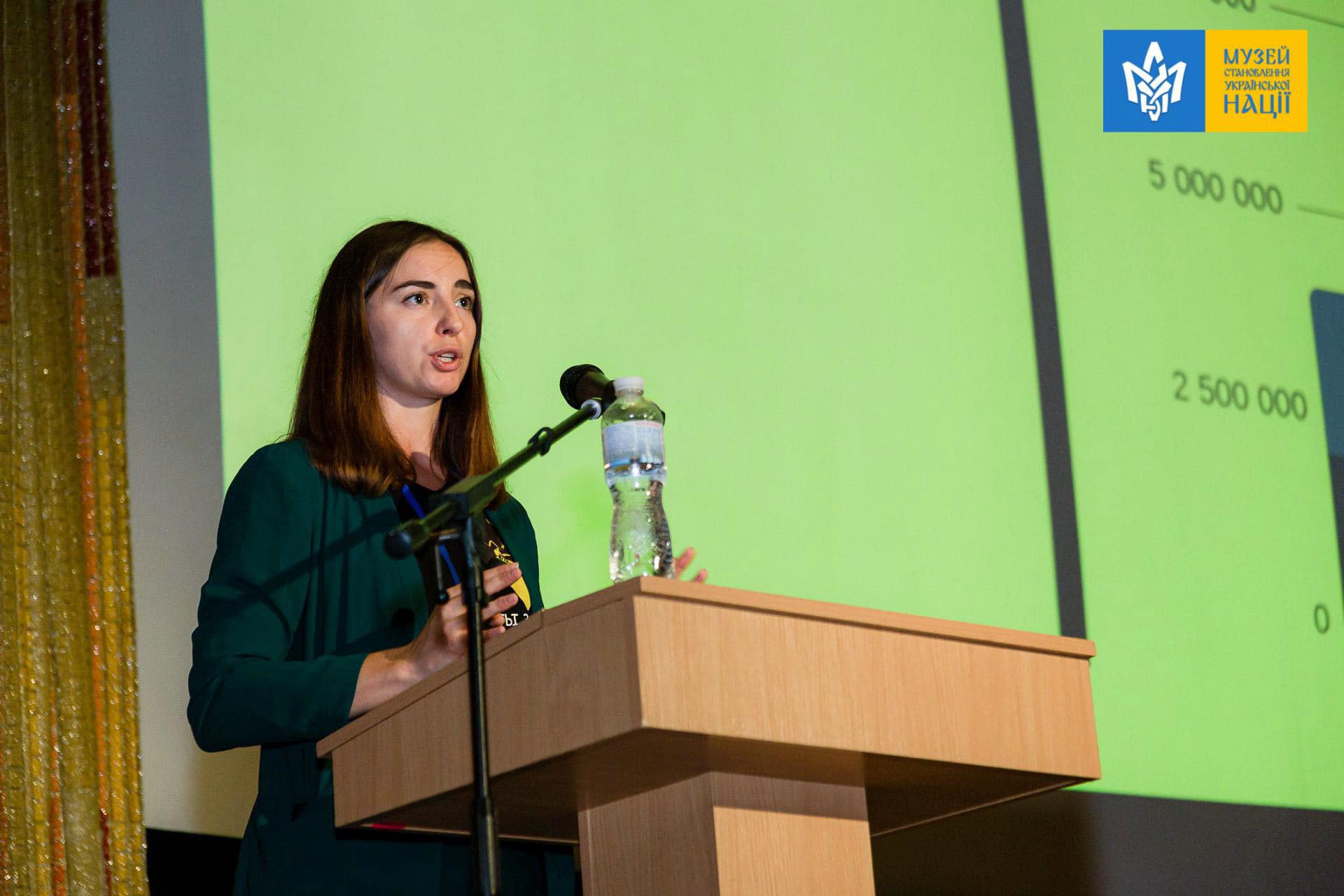
At a time when Ukrainian business is living between war, migration, blackouts, new markets and new competition, the word "resilience" has become more important than ever before. Resilience is not about weathering the storm. It is about having the resources to move on after the storm. This is exactly the kind of resilience that Yuriy Lyashchenko, founder of Vector Group Business Club, certified business coach, Diia.Business expert, speaker at the Kyiv Chamber of Commerce and Industry, and entrepreneur who has built more than one viable business, was talking about. His lecture "Creating a Sustainable Business Model" as part of the Brave 3 program was a master class in thinking that can pull a company out of any crisis. The presentation of the lecture we are analyzing is available in the material
Yuriy starts with the simplest things - but it is those simple things that are most often ignored. "Who among you has a business plan?" he asks. And the silence in the audience suddenly becomes the answer to the main problem of small business: most entrepreneurs start working intuitively, impulsively, emotionally, but not strategically. Lyashchenko emphasizes that a business plan is not a document for an investor. It is a document for yourself. It is a way to see your economic benefits, your niche, your list of goods and services, your costs, margins, sales, and resource requirements. On the presentation slides, he shows the entire set of costs that any business faces: rent, salaries, taxes, utilities, logistics, marketing, the Internet, CRM, telephony, accounting, cleaning, and office. And if these numbers are not calculated, then any talk of sustainability is just an illusion.
He explains that sustainability starts with realism. Businesses need to know what their profits are made of: assortment, margins, locomotives, compensators, additional sales, number of transactions, and stock balances. Businesses need to understand their balance - whether they are in the black or in the red. Only after all this becomes transparent can we talk about anti-crisis models, development, or scaling.
Lyashchenko's approach is simple and tough: "Write down all the risks." His slides contain a list of what Ukrainian business has already experienced: pandemic, war, blackouts, falling demand, irrelevant supply, dumping, and non-working sales channels. But he is not talking about fear, but about readiness. An entrepreneur who has worked out the risks in advance has calmness and strategy where others panic. "Plan B and Plan C," he says. "It's not just a phrase, it's a way of thinking: where there is one model, there should be two more. Where there is one channel, there must be a vertical duplicate. Where there is one solution, there must be an airbag.
The part about two types of anti-crisis measures is especially important. The first is downsizing. It is called an "inflexible story" because a business that only cuts costs is doomed to bankruptcy within five years. The second is to increase customer traffic. It is this flow that gives development, space, and air. It creates a resource that allows you to survive the crisis not by shrinking, but by growing. That's why Lyashchenko urges not to hide in layoffs, but to work on the consistency of sales, marketing and service.
He talks a lot about adaptability. "The more preparation you have, the easier it is to work," he says. And he adds on another slide: "Adapting to the situation gives you the opportunity to develop." This is the philosophy of sustainable businesses. It is not blind optimization, but flexible thinking. An entrepreneur who adapts knows how to turn a challenge into a resource rather than break down.
He singles out the business ideology as a separate block. This is something that most entrepreneurs do not formulate even for themselves. Ideology is not a slogan. It is the basis of decisions. It is the answer to the question of why a business exists, for whom it is created, and what it brings to the market. A business without an ideology can easily be knocked off course, it is not able to withstand external factors because it has no support inside. That is why Lyashchenko advises every business to have an ideological core that determines not only marketing activities but also strategy.
Despite the fact that the lecture is dedicated to sustainable models, Lyashchenko moves on to a long-term strategy-for a year, for five years, and even a strategy "beyond your own life." This approach is more like the thinking of people who build businesses with the ambition to serve not only profit, but also the community, the market, and generations. This is in contrast to the quick bucks mentality that is so common in unstable economies.
Lyashchenko concludes with a proposal: A 30-minute individual consultation. But in fact, the main bonus is the lecture itself. Because it teaches not strategy, but the perception of reality. Business exists between risk and chance. Between numbers and courage. Between miscalculation and inspiration. And only those who know how to work with both poles can create a truly sustainable model.
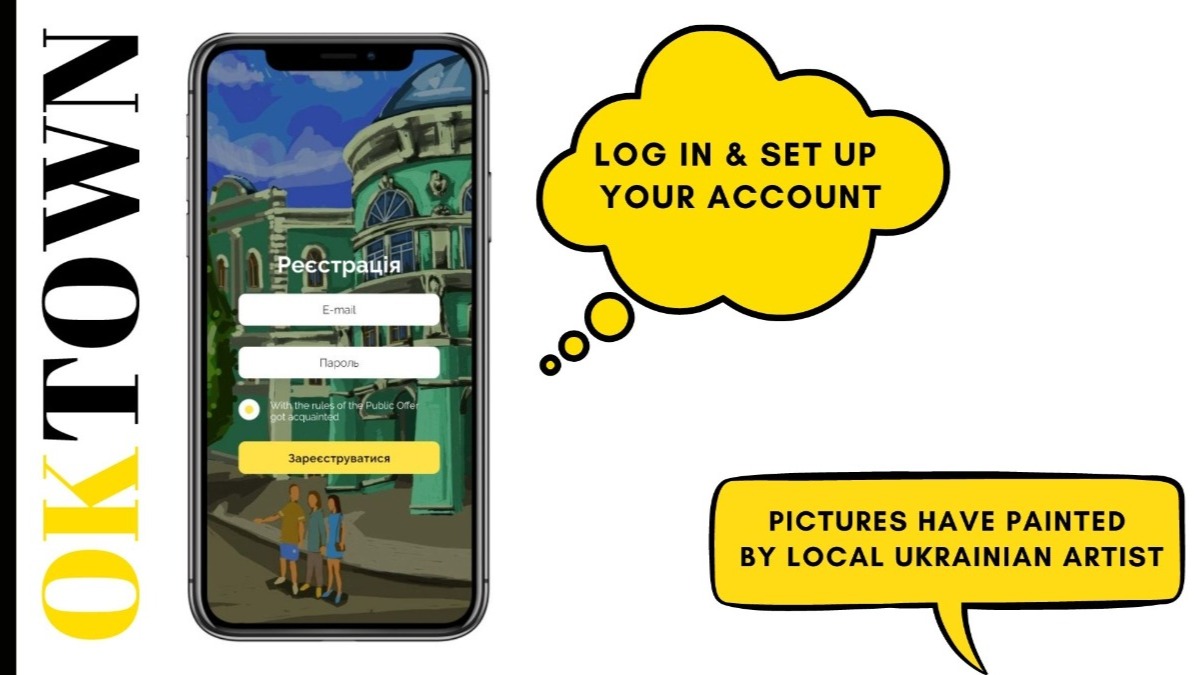
That's why OKTOWN's participation in the Daring 3 program(https://vidvazhna.org) is so logical. Our startup, which operates at the intersection of tourism, service, and digital infrastructure for retreats in Spain, is building a business in the exact coordinates described by Lyashchenko: a clear business plan, system costs, margin control, risk forecasting, a five-year strategy, and a developmental rather than a reductionist mindset. Digitalization - what we worked with during Olga Shikalo's lecture - and sustainability, which Yuriy Lyashchenko talks about, form a holistic model that we are building at OKTOWN.es, helping other entrepreneurs do the same.
Resilience is not fate or luck. It is a decision. A decision to count, plan, adapt and develop. And it's lectures like these that turn entrepreneurs into those who not only survive crises, but grow in spite of them.
Подобається
Не подобається
Інші пости
Дивитись всі
 1
1
 1 min
1 min
 1
3 min
1
3 min
 1
1 min
1
1 min



 Log in via Facebook
 Log in via Google