


A DIFFICULT SEASON. WHAT HAPPENS TO UKRAINIAN TOURISM DURING THE WAR?
 1
1
 0
0
 1 хв
1 хв
 Поділитись
Take a thousand and one photos of the pink lake and Khablivka lighthouse in the Kherson region. Choose between the wild beaches of Sanzheika and the hotels of Zatoka. Watch laser dolphins on Freedom Square in Mariupol. Swim in the salt lake of the Slavic resort. We should have been doing all this and more in the height of summer. Instead, the southern and eastern territories of the country are occupied, and free cities and towns are being targeted by Russian missiles.
But the war does not cancel, but even intensifies the need to rest and recover: people continue to travel in conditionally safe areas, hotels and sanatoriums are open, and guides organize hikes and excursions.
So what does the Ukrainian tourist season look like during the war? How does the government interact with the tourism industry? Is it safe to go on vacation at all, and what destinations should we choose instead of the usual southern routes?
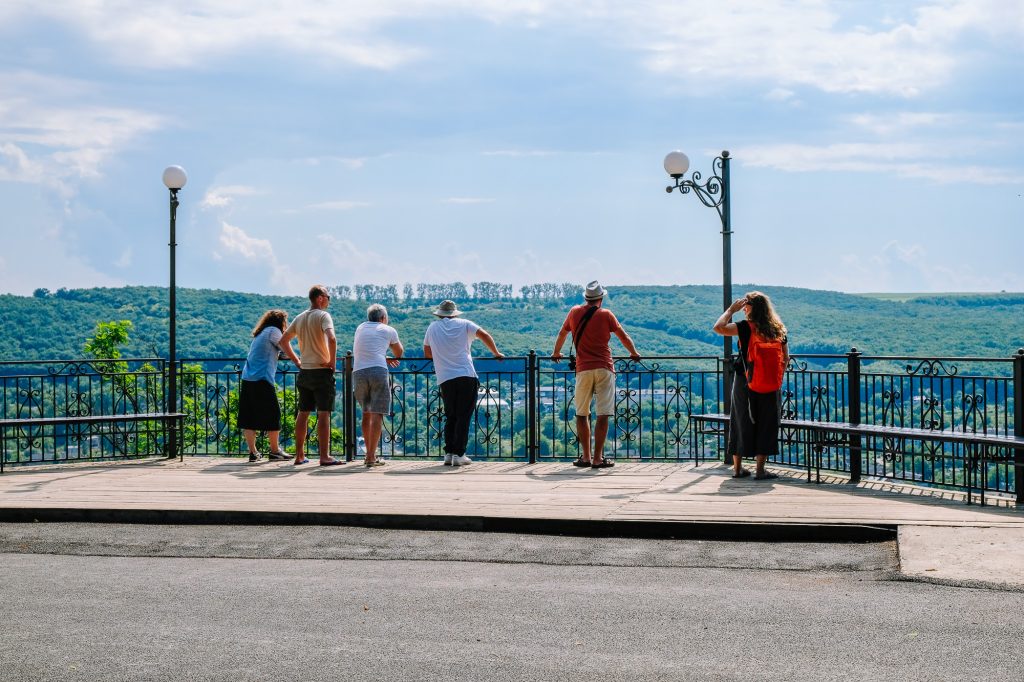
Tourism during the war: to be or not to be
The question of whether to go on vacation during the war is a matter for everyone to decide for themselves. In some places, discussions on this topic are breaking out in society, and tour operators are hesitant to promote their services as actively as they did before the full-scale invasion. There is also the so-called "travel shaming," as travel blogger and independent travel expert Irena Zhuravel characterized it. She explains what it is: "Different people have different levels of stress at the moment, and not everyone is ready to watch someone traveling and posting photos from their vacation. There can be real hate from others. That's why many people don't broadcast these trips or choose the most ascetic ways of vacationing, without expensive hotels and the like."
Nevertheless, experts in various fields tend to recommend traveling during the war, because tourism, as it turned out, also helps bring victory closer. Because traveling is:
- Mental and physical recreation. The high level of stress and physical exhaustion over the past four months has reached a critical point for literally every Ukrainian. Psychologists advise to monitor these conditions and work with them in time. For example, a weekend in the mountains or a few days of relaxation by the lake will help to put your mind and body in order. With restrictions on scrolling the news feed, of course.
- Supporting the country's economy. "Ukrainian business must work," is a statement that comes from all communication channels. And it's hard to disagree with it. Full hotels and busy tour operators are just one more link in the chain of entrepreneurs who pay taxes, provide jobs, and donate to support the army.
A difficult season
So, tourism is here to stay in the summer of 2022. Moreover, some representatives of the industry can already boast of real success. In Khmelnytskyi, for example, there has been a significant increase in demand for travel services and even the emergence of new destinations. And in Chernihiv, one guide gathers a crowd for a tour of the city that recently suffered from the invasion of the occupiers. There are even tour operators that started after the full-scale invasion. Author's Travel Ukraine operates in Lviv and can organize an author's tour of Ukraine from anywhere in the country. The company's founder, Oleksandr Hurtovyi, says: "We work in Lviv, and there are a lot of IDPs here now, so there are plenty of people who want to travel with us. For example, there is a great tour of the Carpathian tram: the trip is easy, comfortable, and not many people know about it. And thanks to this, we always have an almost full bus of people." Oleksandr says that for this trip he gathered the largest group of 56 people, and the smallest of 29.
However, not all representatives of the tourism industry are doing well. In general, this year's tourist season in Ukraine is not easy, as the State Agency for Tourism Development of Ukraine characterizes the situation.
Head of the State Agency for Tourism Development of Ukraine Mariana Oleskiv said that in the first four months of 2022, the state treasury received 18.1% less taxes from tourism than last year for the same period. "Some tourist and recreational infrastructure is occupied, some is completely or partially destroyed. We are recording these losses to assess them and help in the future with recovery. Tour operators and travel agents have suffered and have stopped working for several months because of the war," she said.
Currently, tour operators organizing domestic travel have somewhat resumed their work. In particular, one of the largest tour operators in western Ukraine, which specializes in domestic travel, has resumed its activities by about 30% compared to last year.
According to Mariana Oleskiv, there is practically no inbound tourism in Ukraine today. "There are foreign journalists, volunteers, representatives of international organizations who are currently working in Ukraine, and our tour operators provide them with certain services to enter the country and support them. But this is a drop in the bucket compared to the volumes they had last year," stated the head of DART.
Oddly enough, despite the losses suffered by Ukraine's tourism industry due to the war, in the first four months of 2022, the amount of tourist tax amounted to UAH 64 million 611 thousand, which is almost 65% more than in the same period in 2021 - when the budget received UAH 39 million 206 thousand: the head of DART published analytics showing a significant increase in numbers. However, she explains this by the realities of the war: "Most Ukrainians, fleeing the bombing and not wanting to be occupied, were forced to leave their homes in the eastern, central, and southern regions and move to safer areas in the west. The situation has now changed, people have returned to their homes and most of the accommodation facilities in the western regions of the country are now half empty. This means that the share of the tourist tax in the second half of 2022 will be significantly reduced." In conclusion, Mariana Oleskiv does not undertake to make predictions, because the situation is changing very quickly.
Traveler Irena Zhuravel also notes the gradual recovery of domestic tourism: "According to my observations and experience, tourism is now gradually waking up compared to even May. People have vacations and need to use them and improve their mental health a little bit. Of course, tourists avoid the areas bordering Russia and Belarus. Thus, after the recent news, we can feel a decrease in the number of vacationers in the Volyn region."
Compared to last year, tourism has certainly dropped significantly. But the expert sees a small, but still upward trend: "People go for weekends or even long vacations. Due to the situation in the country, it is very difficult to track how many people are traveling not as displaced persons, but purely as tourists: they want to rest and gain strength to return and work even harder, donate, and help the country. I would say that tourism is now recreational. If earlier most of the requests were for sightseeing, now people want to quickly recuperate. So the popular destinations are nature, sanatoriums, and spas. Anything that helps to restore both mental and physical health in a short period of time. This is the first difference between today's tourism and pre-war tourism. Another difference is that when choosing a destination, people are primarily looking for safe places. Ukrainians are very tired, so they want to get to a place that is not mined, where there is the least chance of coming under fire or even just hearing an air raid alarm. Because even the distant sounds of sirens do not allow you to fully distract yourself and interfere with recreation. I was recently in the Carpathians and noticed how we now react to rain and thunder: even though we understand the unlikelihood of shelling here, we felt anxious and woke up in the middle of the night thinking "it's come." Wherever we are, we all have a trace of the war in our minds. Everyone has PTSD of varying severity," she says.
What about security?
Today, tourists are primarily received in the western and central regions of Ukraine. The state does not provide a specific list of areas where it is safe to rest, because every town or village is under threat: there have been rocket attacks on the village of Volovets in Zakarpattia and Serhiivka in Odesa region. The State Agency for Tourism Development of Ukraine says that the safety of citizens today should be a priority and the basis for every action. "Local authorities, as well as special agencies and services, should assess the security in their region. Then they should give recommendations - whether to go to the beach or not, whether to go on a hike or not. If local authorities, the State Emergency Service, police and military of each region are ready to take responsibility for human lives and recommend certain regions for recreation, this will have a certain rationale. However, each person will make their own decisions about their safety," says Mariana Oleskiv.
If there are no direct permits, there are bans. Local authorities determine the places that cannot be visited. For example, we have already published news about the situation with beaches in Ukraine, a list of parks in Kyiv that are off-limits to visitors, and restrictions on hiking in Zakarpattia. This information is constantly updated, so when planning a trip or walk, we recommend checking the safety of routes on the website of the military administration of your region and the State Emergency Service.
In addition, to protect yourself, you should follow simple rules:
- Choose places and destinations that have not been under occupation.
- Buy tours from reliable companies that have transportation permits and experience in organizing travel.
- Do not ignore air raid alerts.
- Find out if there is a bomb shelter in the place where you plan to vacation.
- Refuse to go mountain hiking on your own: it will be safer to use the services of a guide/instructor.
- Return to the place of overnight stay before the curfew.
- Do not swim in water bodies or walk in forests where it is prohibited.
Sea resorts are actually closed
Unfortunately, today we can't talk about the start of the tourist season in Kherson, Mykolaiv, and Zaporizhzhia regions, as most of the southern territory is occupied or in the area of active hostilities. Vacationing in Odesa region is also not safe due to rocket attacks and landmine explosions. The holiday season has not been opened here and it is still officially forbidden to stay on the coast and swim in the Black Sea. The Odesa regional military administration has communicated that mass events such as beach discos, concerts, or banquets are also banned. The only way to legally relax is in sanatoriums, hotels, or recreation centers, including those with private swimming pools. Entertainment venues can operate, but must adhere to curfews.
Thus, the Ukrainian sea is not the best option for safe recreation and rebooting today. Therefore, those who want to swim are looking for alternatives:
- Private pools.
- Lakes in relatively safe central and western regions.
- Quarries (but you need to make sure they are suitable for swimming).
- Rivers and waterfalls in the Carpathians.
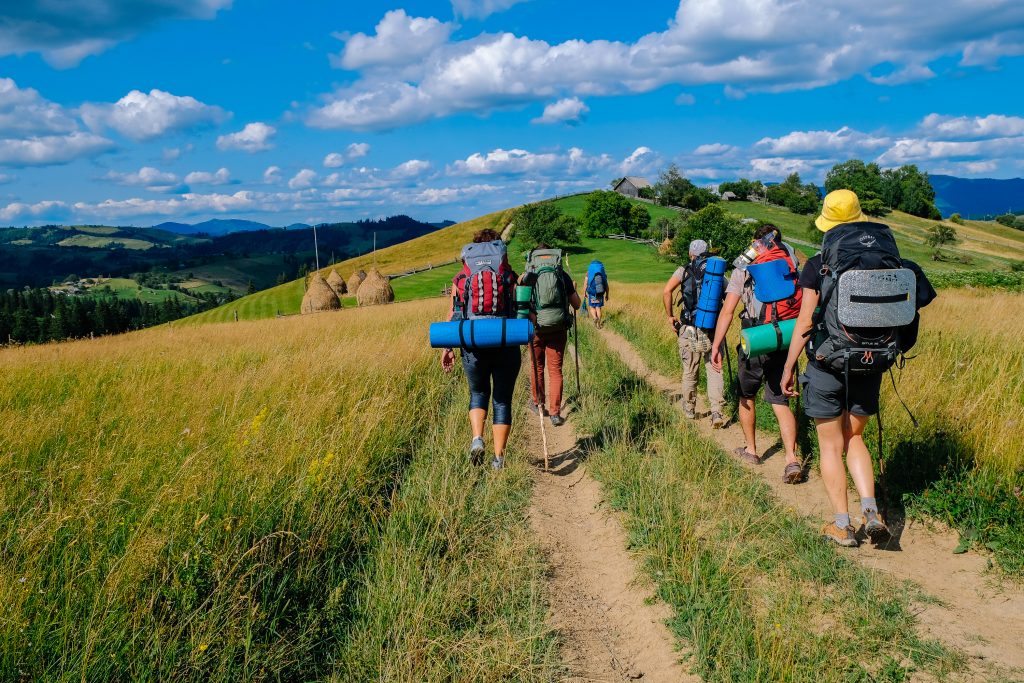
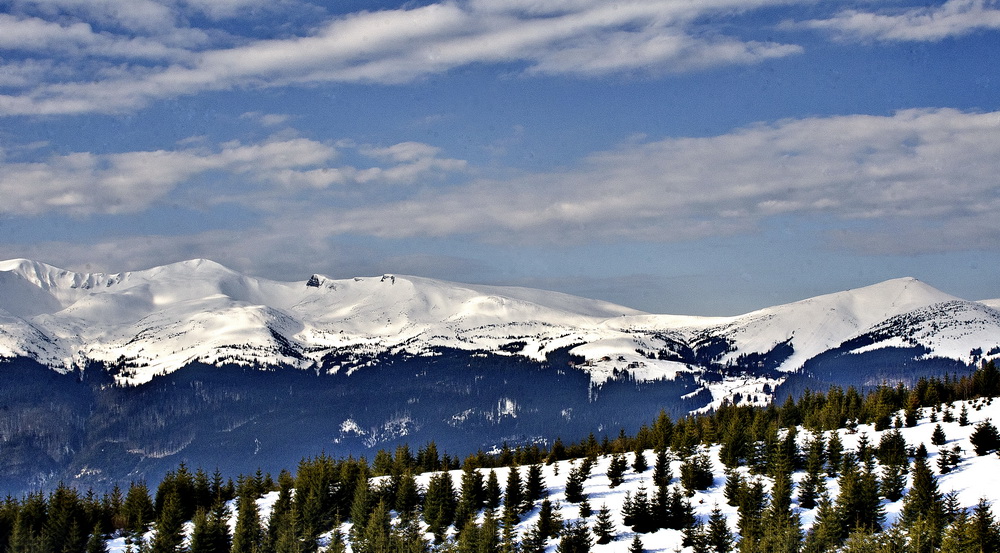
If water activities are not a priority, tourists choose the mountains: there is plenty of room to run around. Hiking in the Carpathians is popular again: people go camping for a few days or on one-day hikes. They stay in hotels or private estates, of which there are many in the mountainous areas. Owners of houses in the Carpathians are already noticing an increase in demand: if earlier the tenants were internally displaced persons, now vacationers are coming. Their number, of course, is less than even during the pandemic.
Cultural tourism as a new trend
Since the beginning of the war, the western regions have become a refuge for all those fleeing the occupation and hostilities. It was not tourism in the usual sense, of course, but hotels, mansions, and hostels were full. And guides and organizers of short excursions or hiking trips had plenty to do: the displaced people wanted not only to escape the horrors of war. They showed great interest in the history, traditions, and peculiarities of the area where they came. Thus, a completely new, unexpected front opened up: the cultural front. Delving into the cultural, linguistic, and historical peculiarities of their country became a real weapon against Russian propaganda and so-called "inferiority."

Today, the number of immigrants has decreased significantly, and there are not so many people who come solely as tourists. But they do come. For example, the tour operator Kraina UA resumed operations in early June and has already seen a certain increase in demand for day trips from Kyiv. "We did not know whether we would be able to gather the necessary number of people and how people would react to our offers. We were quite pessimistic. But the first trips encouraged us a bit. Of course, the number of customers has decreased significantly. We estimate that demand is down 85% compared to last year. But gradually, the indicators are improving. People want to travel, they are looking for a way to get away from bad news and thoughts. They also want to learn more about Ukraine and see different places. Historical sightseeing trips have become an alternative to seaside vacations. Now is the time to get to know your country, its history and culture. It helps to understand current events," said Yaroslava Zagorodnya, Head of Development at Kraina UA.
Traveler Iryna Zhuravel also recommends focusing on locations that tell the story of the history and authenticity of our country. "Nowadays, there is a tendency to fill in the gaps in knowledge of the history, culture, and customs of our land: it turned out that we don't know them that well. I advise you to visit museums, landmarks, castles in the areas where you are staying. Because you can only love what you know well. If we know Ukraine well, we won't be able to be imposed on by propaganda, harmful myths and stereotypes," she says.
The tourism business is at a standstill
What is happening to the tourism business in Ukraine? In short, it has suffered significantly. Increased demand for travel agent services in the western regions cannot compensate for the damage done to the industry across the country. In addition, the financial situation of many Ukrainians has deteriorated, giving rise to disappointing forecasts even for those who currently provide travel services in relatively safe areas. The state is currently unable to provide operational support to this business, as budget funding in Ukraine is primarily used for military needs and critical infrastructure.
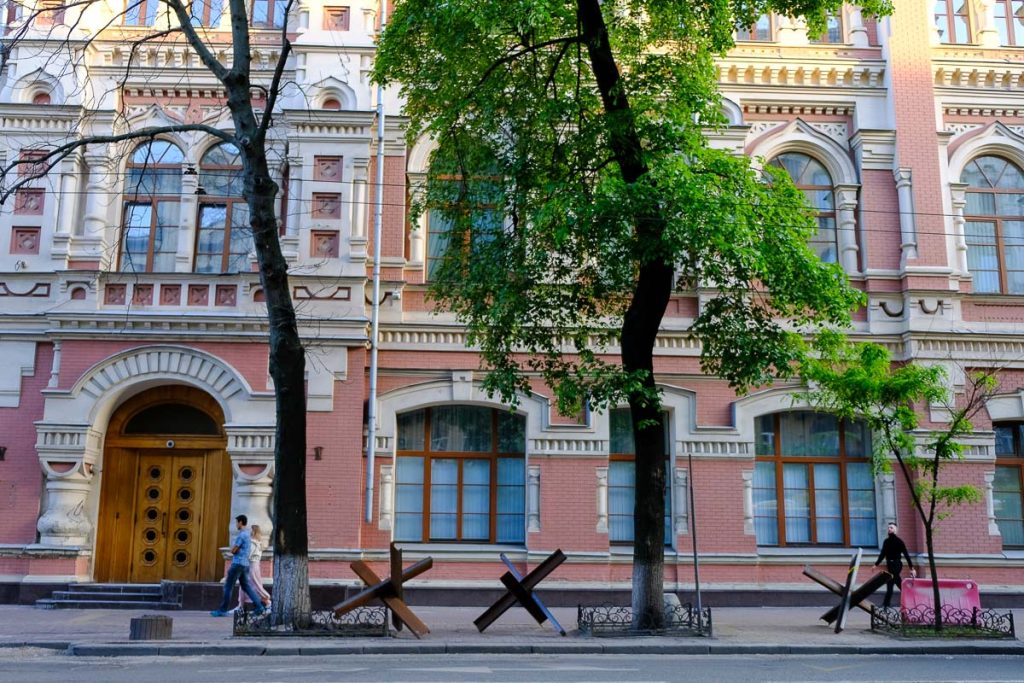
Mariana Oleskiv, head of DART, says the agency is developing a number of programs to support the industry with international funds. "One of these programs is to support resorts in Lviv, Zakarpattia and other recreational areas that foreign tourists like to visit not only to relax in the lap of nature but also to get treatment. We understand that in the summer of 2022, these sanatoriums and resorts will be almost empty. Then the medical part of these facilities will have to be put on hold, and employees will have to go on forced vacations. This will have an extremely negative impact both on the resorts themselves, which may lose highly qualified specialists, and on the tourism industry as a whole. That is why DART, together with the leadership of these regions and the Ukrainian Resorts Association, is developing an action plan to help the industry survive in this difficult time. One of the possible options is to use sanatoriums and recreation centers for rehabilitation after injuries of our defenders, as well as women and children affected by the war. We are preparing an appeal to international foundations that are ready to contribute financially to such programs. This will not only support Ukraine's tourism industry and save jobs, but also provide the necessary assistance to the military and civilians. I would also like to remind you that in 2020, amid quarantine restrictions, the State Agency for Tourism Development of Ukraine managed to reduce the VAT rate for accommodation facilities from 21% to 7%. This rate is still in effect to this day," said Oleskiv.
Instead of a conclusion: where to go on vacation in summer 2022

In general, the western and central regions of Ukraine are best suited for traveling this summer. There are thousands of locations there that can satisfy completely different requests of tourists. Following the advice of the heroes of this article, we have chosen our own top places to explore unknown corners of the country and finally visit those that have long been on the radar:
- Ostroh (Rivne region). The history of the city dates back to the times of Kyivan Rus. An interesting location to stay for a few days and plunge into the past of your country.
- Skole Beskydy (Lviv region). A national nature park with incredible views, pristine beech and spruce forests, waterfalls, an ancient fortress, forest lakes and springs.
- Bush (Vinnytsia region). An authentic, even a bit magical place. It will help you get acquainted with Trypillian culture and enjoy nature.
- Dzembronia (Ivano-Frankivsk region). The highest mountain village in the Carpathians, where the identity of the local culture has been preserved, one of the centers of ecotourism.
- Stilsko (Lviv region). An ancient place, a medieval settlement, which is called the capital of the White Croats.
- Tyasminsky Canyon (Cherkasy region). A picturesque place on the Tiasmyn River where you can swim and enjoy the scenery.
- Solotvyno (Zakarpattia region). The resort with salt lakes is suitable for recovery and recreation.
- Bakota (Khmelnytskyi region). Rocky shores, beaches, the remains of a rocky monastery, and beautiful views attract tourists to Bakota Bay on the Dniester.
Photo: veterdoit.com archive
Text: https://veterdoit.com/neprostyy-sezon-shcho-vidbuvaiet-sia-z-ukrains-kym-turyzmom-pid-chas-viyny/?utm_source=telegram
Подобається
Не подобається
Інші пости
Дивитись всі

 1
1
 8 min
8 min
 1
1 min
1
1 min
 1
4 min
1
4 min


 Log in via Facebook
 Log in via Google